Is it a plant? Is it a mushroom?
By Daniel Butler: author and forager
Lichens are part plant, part fungus and are very early life forms. The oldest proven specimen is some 400 million years old, although there is some evidence that they could date back some 600 million years.
Lichens are very slow-growing so cannot compete with plants in rich growing conditions. Instead they favour inhospitable conditions such as cliffs, gravestones or tree bark.
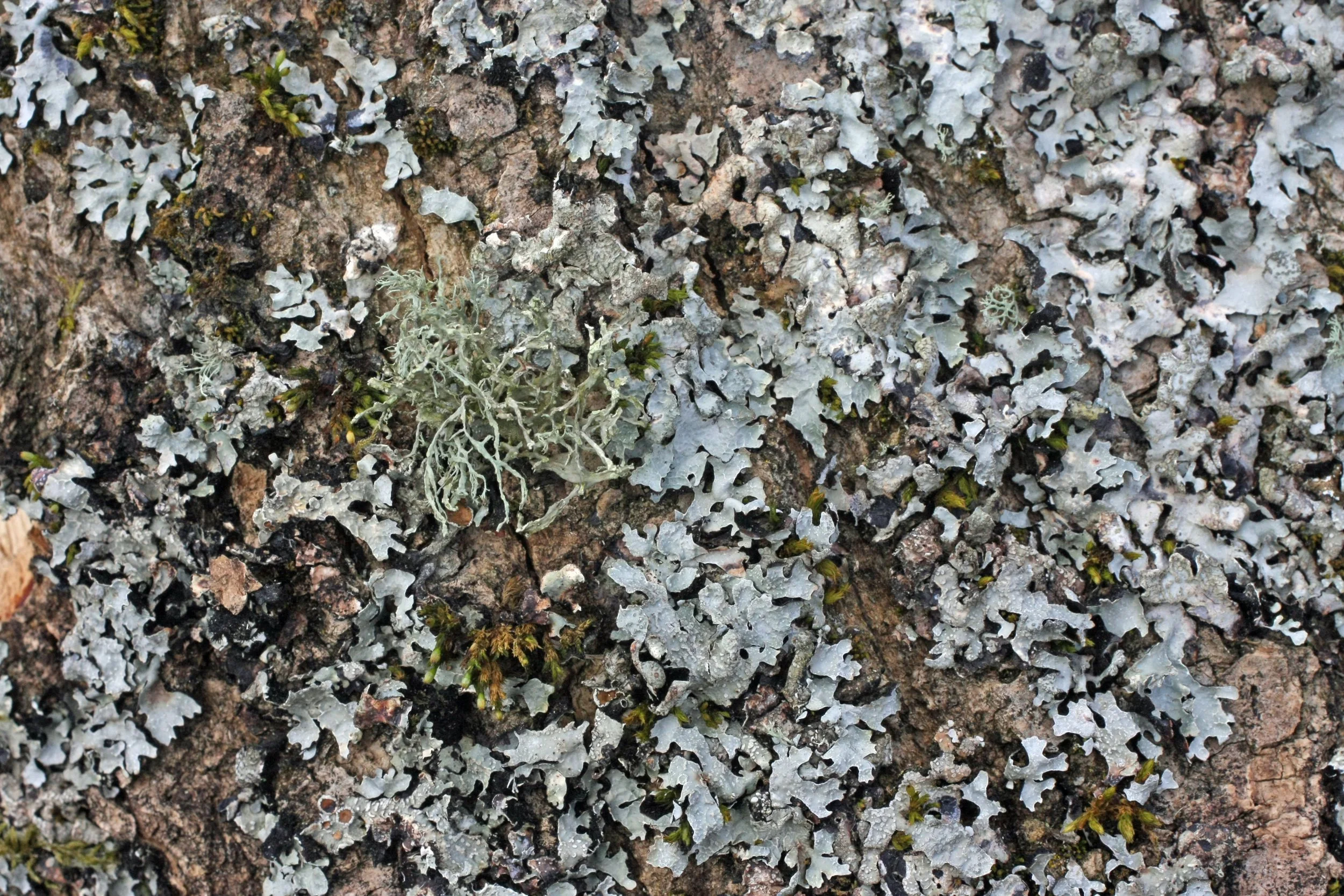
Lichens are one of the world’s most ancient lifeforms
(Picture: Author’s own)
One of their evolutionary advantages over plants is that can tolerate long periods without water, going into a state of suspended animation. Indeed, in 2005 two species were sent into space on a rocket where they were deprived of air and exposed to wildly fluctuating temperatures and intense radiation. They returned to earth after two weeks and revived with no discernible damage.
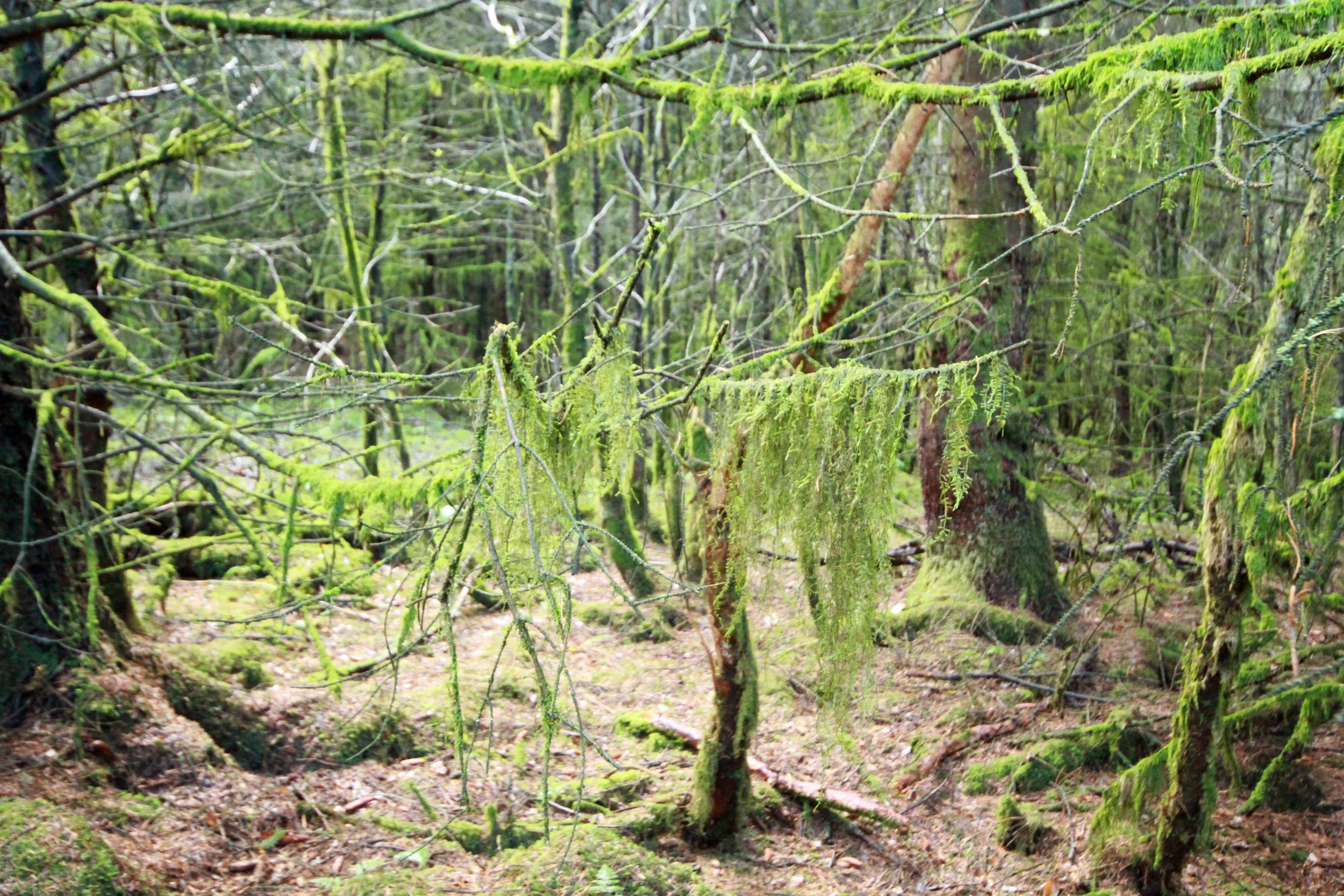
Lichens have a neutral or even beneficial effect on tree hosts
(Picture: Author’s own)
Unlike fungi which tend to have either a symbiotic or parasitic relationship with a tree, lichens have an entirely neutral or even beneficial relationship with their host.
They do not tap into its nutrients: instead they merely use the tree as a growing platform. Some lichens have photosynthetic cyanobacteria as their partner either instead of, or in addition to, green algae. These bacteria can turn nitrogen from the air into nitrate fertilizer, in this respect resembling the bacteria in root nodules of the pea/clover family. These nitrates leak out and benefit the host and surrounding vegetation.
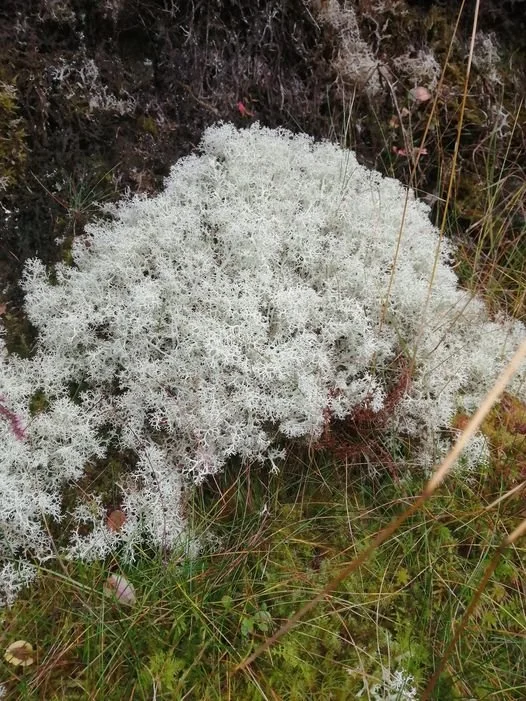
Reindeer moss blankets the tundra soil
(Picture: Author’s own)
Reindeer moss (Cladonia stellaris) is vital to life in its particular eco-system. Despite its name, this is a lichen, not a plant and it grows in dense mats across the taiga. As its name suggests, it is a vital foodstuff for the hardy animals upon which nomadic Arctic peoples depend.
The difficulty for plants in such areas is that the lack of water. Regardless of the almost ever-present snow, these wastes are effectively deserts with all liquid water locked away for most of the year.
Lichens, however, are ‘ultra-survivors’. Despite being incredibly slow-growing (reindeer lichen grows at 3 – 5mm a year) they can exist in places where plants cannot cope. This might explain why – if one uses the word fungi loosely – it is the world’s most common fungus.
Lichens also act as the first colonisers of rock faces. They are usually the first living things to take hold on cliffs where they eke out a living in the arid conditions by extracting nutrients from the air and underlying rock.
Over the years they slowly degrade their stony perch as they extract minerals and penetrate the stone. Wind-borne dust lodges amongst their folds. When they die they slowly create the first hint of soil – which is then colonised by opportunistic tough grasses. Birds perch on these and accidentally bring in the seeds of scrub and trees. In other words, the next time you see a hawthorn or whitebeam clinging to a cliff, the chances are it owes its origins to a colonising lichen.