Sounds of Spring
By Daniel Butler, Author and forager
Surely one of the greatest spring joys is to go to bed with the curtains drawn and the window open? One then wakes naturally as the skies begin to lighten and nature’s volume control slowly cranks up almost imperceptibly, as bird after bird launches into song. Eventually it is a veritable cacophony of calls, each the distinctive trill of a territorial male proclaiming ownership of a particular bush, shrub or tree.
But while we may thrill to the sound, few of us can distinguish the individual species, not least because if one can catch a glimpse of the chorister amid the emerging foliage, most are almost identical. They are small thin-beaked and drab a visually undistinguished group, but true ‘diamonds in the rough’.
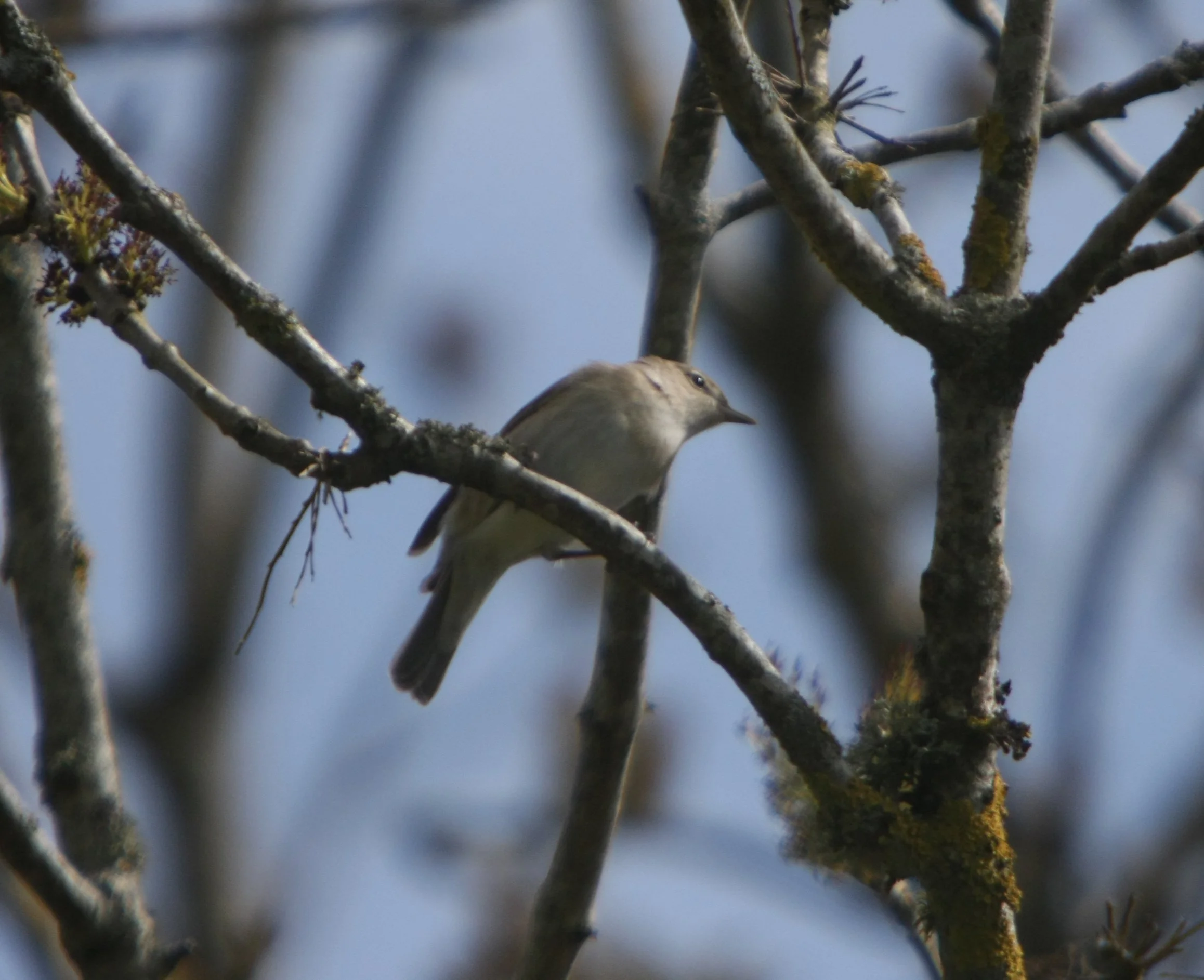
It’s a warbler - but which one?
(Picture: Author’s own)
These little songsters winter in Africa and arrive quietly and unnoticed in early- to mid-spring. The touchdown is timed to coincide with the warmer weather and longer days that lead to an explosion of insect life.
As the first tender, juicy, shoots emerge, insects emerge from hibernation to start a reproductive frenzy and the birds are on hand to cash in on this protein bonanza. Better still, our late spring and summer days are much longer than those in the Tropics, giving the birds vital extra hours to find food for one, two or even three broods. This is good news for gardeners, for each parent warbler will harvest up to 500 insects daily to nourish their young.
Meanwhile the males will be in full voice as they mount vocal territorial battles with a melodic proclamation of ownership and possession. From late April to mid-June they will sing lustily to create a dawn chorus which is one of the greatest natural concerts.
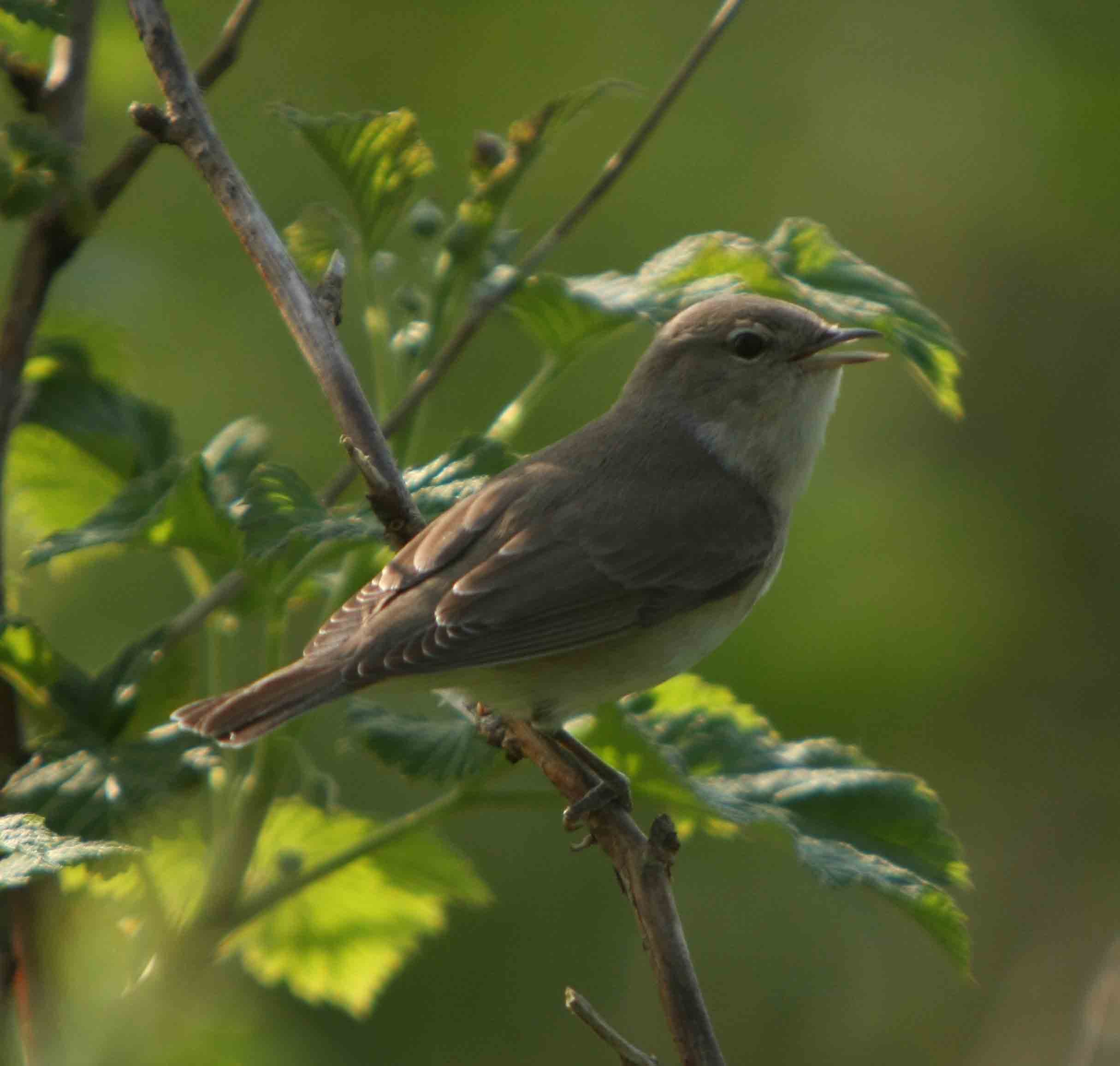
A garden warbler trilling his heart out - but until he sings he could be a willow- or reed warbler
(Picture: Author’s own)
This is also the simplest identification key. Each species has its unique song. Not only does advertise their presence to rivals and potential mates, but it allows most to forego gaudy plumage for the safety of camouflaged grey, brown, olive or yellowy-white. Indeed, they are so unremarkable in appearance it was not until the late 18th century that possibly our greatest amateur naturalist, Gilbert White, first spotted the difference between wood and willow warblers. A talented musician when not observing nature, he noted birds with distinctive songs were not responding to each other and deduced they were separate species.
Our commonest species, willow warblers and chiffchaffs are virtually indistinguishable (the most notable visual difference being the latter’s black legs). Distinguishing them is easy, however, for while the former has a gorgeous melodic song, the latter (generally the first to arrive in early spring) has a monotonous onomatopoeic call.
For anyone wanting to learn more about their local warblers, there is a free app, Merlin, which can break down the dawn chorus into its constituent species. Better still, this comes from Cornell University. The results of each recording are fed back to the researchers to give an incredibly detailed insight into the distribution bird populations.