The 2026 season begins!
By Daniel Butler: author and forager
Mention wild mushrooms and most people think automatically of autumnal dead leaves and the hint of frost to come. In reality, Keats’ season of mellow fruitfulness is just the peak of a long fungal drum roll which kicks off now.
At any second millions of our most valuable wild mushrooms will burst forth along railway lines, waste ground and even on golf courses, only to fade and rot, ignored by passers by. Yet only yards away their mere mention as an ingredient can double the price of a restaurant dish: try switching the name of chicken supreme to poussin aux morrilles.
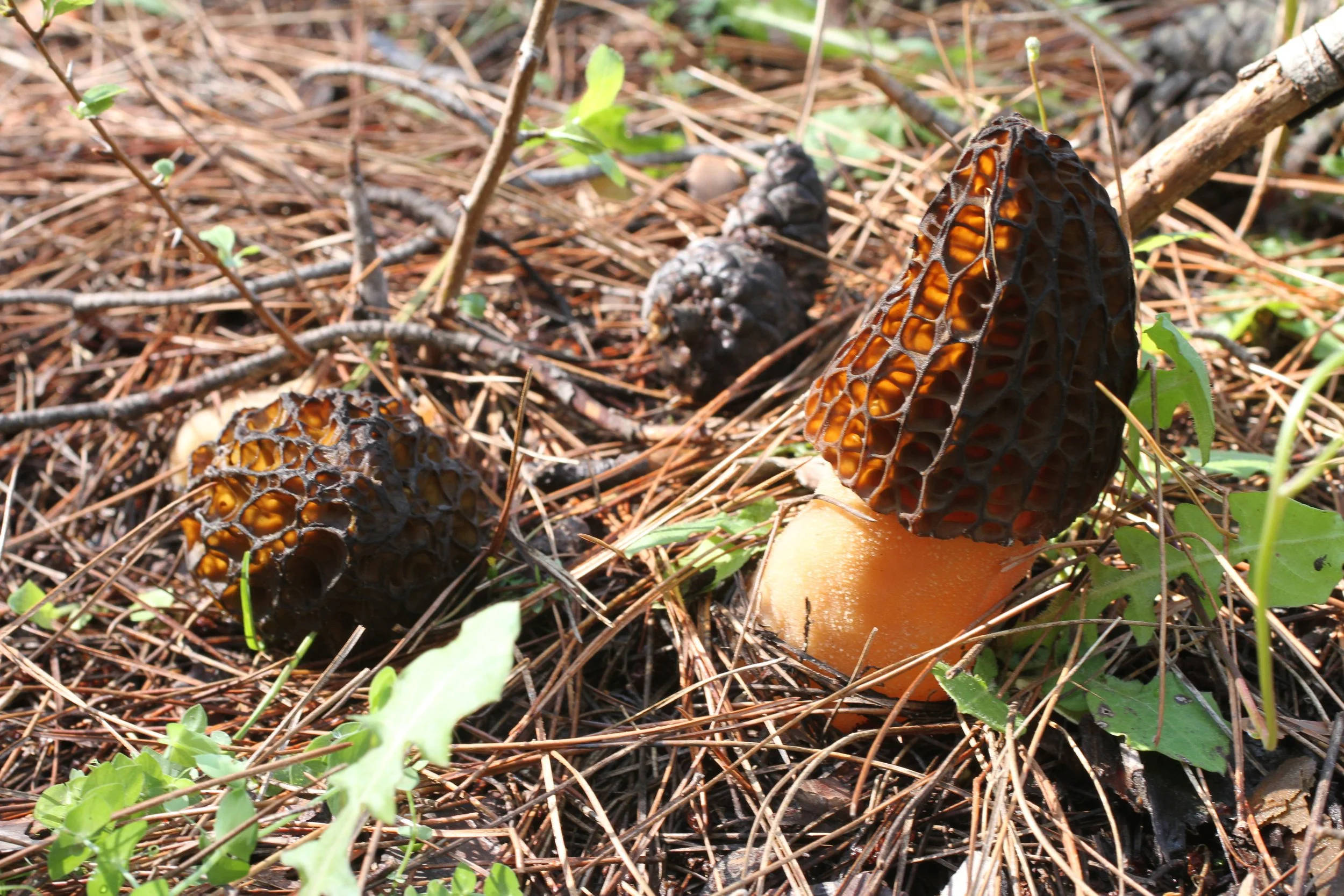
Morels grow on alkaline soil, usually in association with trees
(Picture: Author’s own)
Many chefs would rate the morel second only to the truffle in the taste rankings, although aesthetes would retort only a wizened black truffle could be uglier. They both have a point. Morels have a superbly aromatic flavour. The thick white stalk is topped with a black, brown or beige honeycombed cap. As the mushroom ages, this fades to yellow and becomes deeply pitted, looking anything but appetising – until, that is, they have been through the hands of a sympathetic chef.
These mushrooms are fungal opportunists, springing up on any suitable ground, although they generally prefer sandy alkaline soils. They can grow beneath both conifers and deciduous trees (particularly ash), but are equally at home in the open – golf links and wasteground are a favourite habitat. Recently, many people report finding them in the bark mulches in supermarket car parks and flower beds in urban parks.
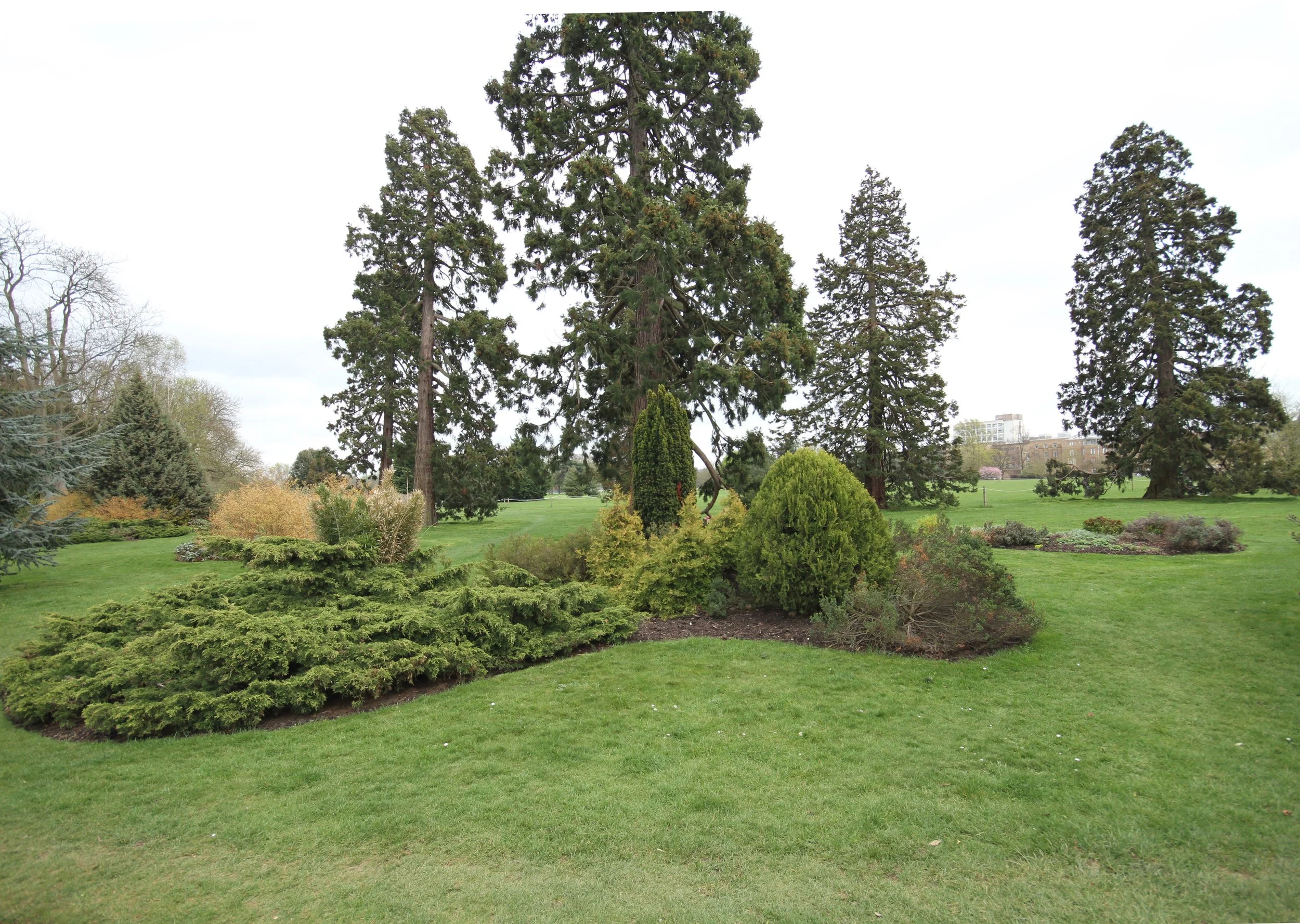
Bark-mulched beds in urban parks and supermarket car parks can be good hunting grounds
(Picture: author’s own)
They also have a liking for aftermath of devastating fires, for the combination of bare soil and plenty of potash rich ash creates the perfect conditions. As a result they can grow around bonfires and flushed in huge numbers on London bombsites after the Blitz, nourished by lime from the fire-baked mortar. In the same vein, American websites list forest fire co-ordinates, knowing full well that two years later these are likely to be rich in morels.
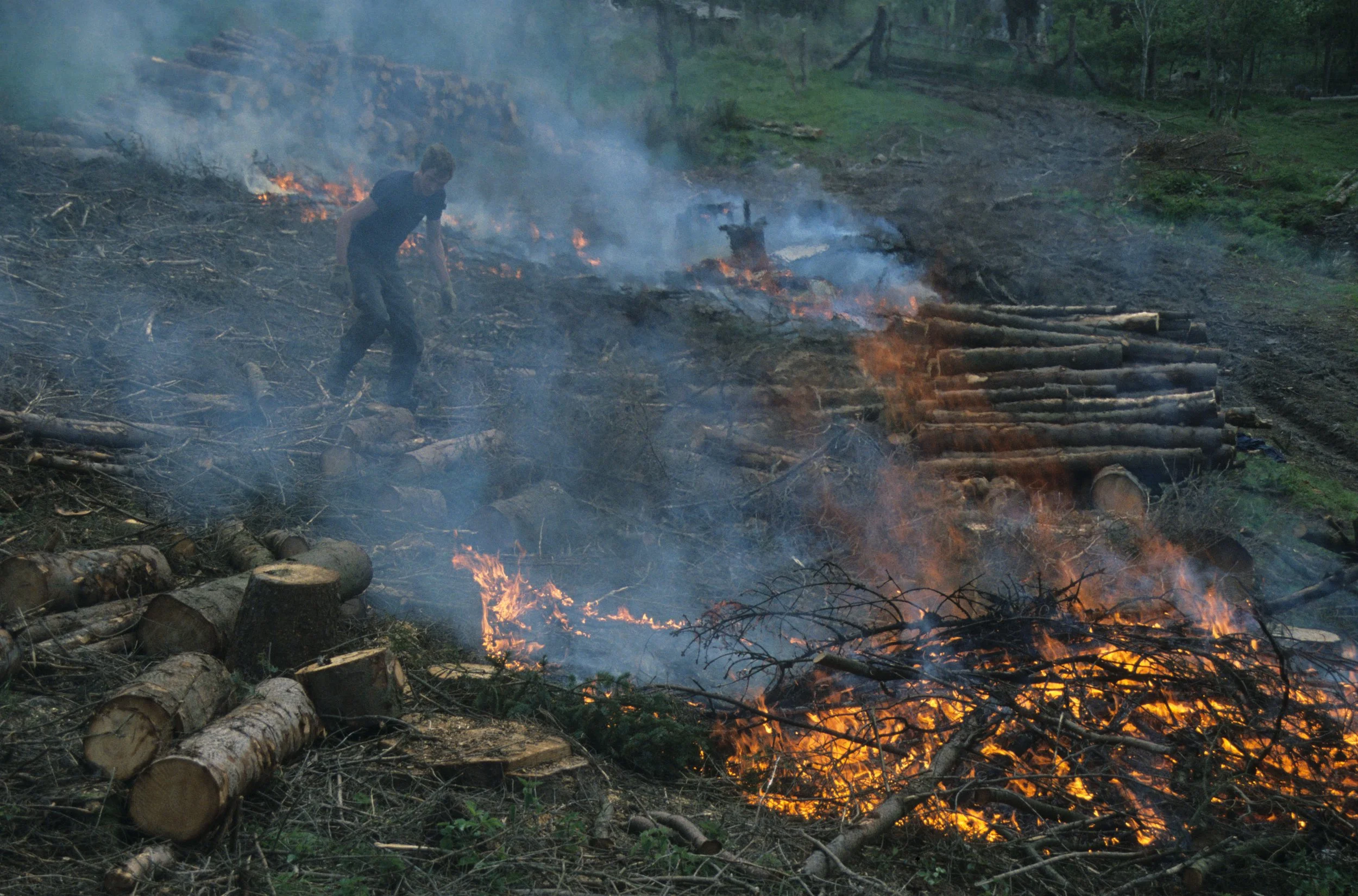
They like to grow in scorched ground - particularly in the aftermath of forest fires
(Picture: Author’s own)
Yet despite their bizarre appearance, wide distribution and love of destruction, morels are anything but easy to find. The otherwise conspicuous pale stalk is often masked by grass or foliage, while the muted, pitted, cap blends in with most backgrounds. They can grow in profusion, however, so once the first find is made, search hard – particularly along the path of prevailing winds – to find more.
Until recently, edible morels were divided into half a dozen species – a fact still reflected in most guide books. Mycology is barely a century old, however, and the experts keep changing their minds. Current thinking says there is just one main species, with regional variations of cap colour, size and shape. Grouping them all together causes less surprise among gastronomes, for cooks have always treated each variation with the same degree of veneration. One word of warning, however: there is a poisonous look-alike, the false morel. This usually grows under conifers and its cap is actually more deeply convoluted than pitted, resembling a brain – but more importantly, its stalk is divided into several chambers rather than one large cavity.
If you are fortunate enough to find a patch of the real McCoy, collect them carefully, cutting the stalks at ground level with a knife. Once home, the easiest way is to clean the mushrooms carefully with a brush (do not wash – this devastates the delicate flavour of any wild mushroom). It is also a good idea to halve each to check no insects are hiding in the stem. Then thread with cotton and hang in a warm, dry, dark place (an airing cupboard is ideal) until dry. This usually takes about a day after which they can be stored indefinitely in airtight jars. As with all dried mushrooms, use by steeping in near-boiling water for 15 minutes, reserving the liquid to use as stock (the reconstituted flesh is actually of secondary value).
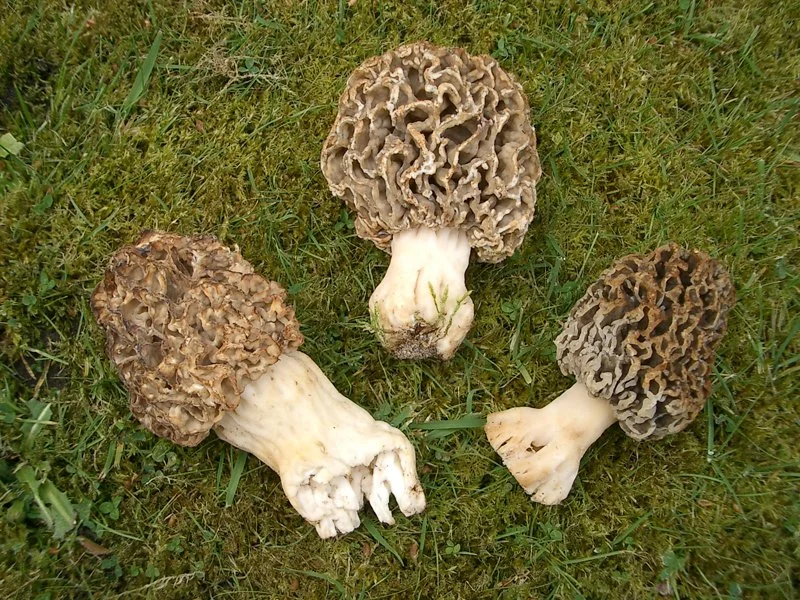
These were growing on a links golf course in Norfolk
(Picture: Peregrine Crewe)
Fresh or dried, morels can be very indigestible when raw, so they should always be cooked. This breaks down the tougher proteins, to release a wonderful flavour which is particularly good in sauces. While they work well with white meats like chicken, they also go well with dairy produce and Jane Grigson’s Mushroom Feast gives a particularly mouth-watering recipe for tartlets filled with morel-flavoured Mornay sauce. The best way I have ever eaten them was in an Alpine fondue after a day on the ski slopes.
Whether using dried or fresh, however, their superb flavour could instantly convert even the most fungi-phobic Briton into a fanatical mushroom hunter. The idea that such choice ingredients are there for the taking then leads to a whole new dimension to an April walk. And, here comes the usually overlooked wild mushroom health warning – forays are seriously addictive: find enough mushrooms to flavour one dish and your Spring walks will never be the same.