One swallow does a summer make
By Daniel Butler, author and forager
One of the highlights of spring has to be the arrival of one of our most acrobatic summer visitors. Suddenly one morning the air above my fields and lawn is filled by a melodious, bubbling torrent, the flow punctuated with slight tics. The chorister is a metallic blue-backed, brick-throated, fork tailed, acrobat that flits delicately above the grass as it hunts flies and midges.
Most guides brush over the swallow’s voice, but anyone with a resident pair in their garages, barns or sheds, instantly recognises this as a concrete signs that summer is on its way. Glossy hordes have flooded in from their South African wintering grounds.
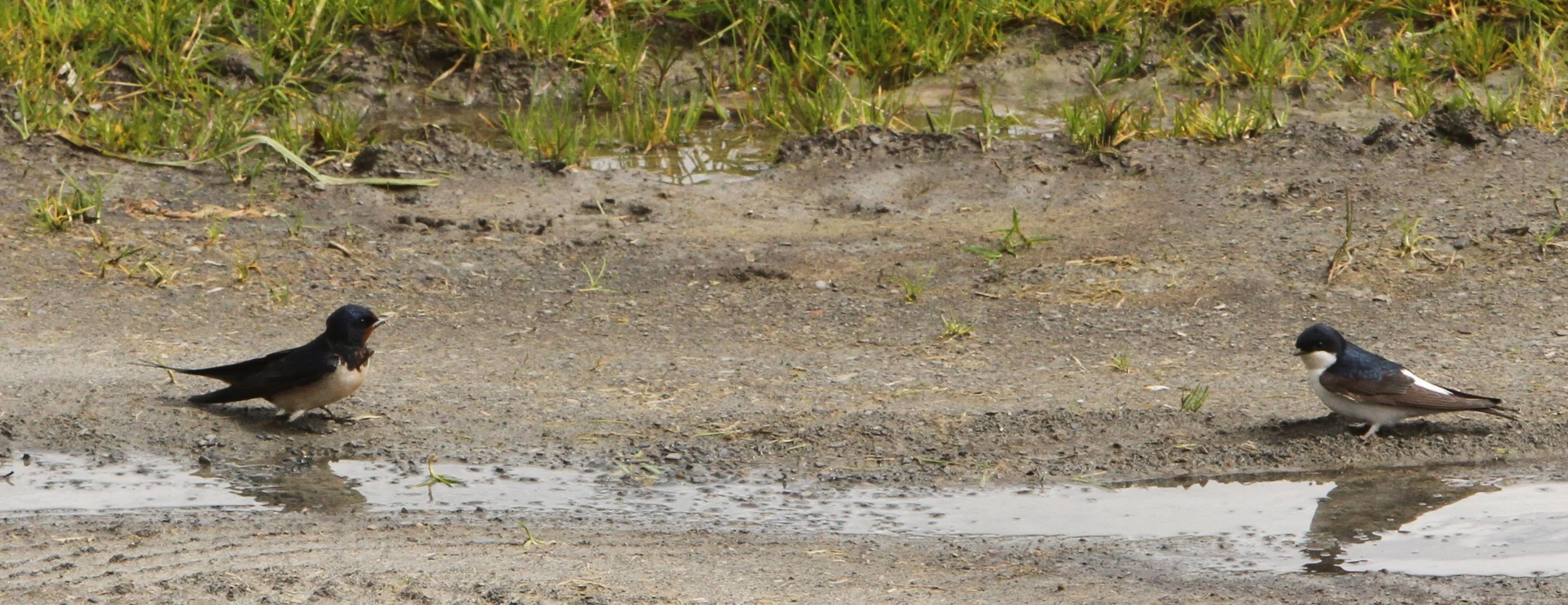
Swallows (left) and house martins (right) can look very similar, but the former have ‘streaming’ feathers on their tails and a brick red throat
Picture: author’s own
They can easily be confused with house- and sand martins, while the more distantly related swift can also seems similar. Actually distinguishing the swallow from the others is relatively easy. In flight the swallow’s white belly distinguishes it from the swift which is black all over and has longer, scimitar-shaped, wings. House martins share the white underside, but also have a white stripe across their bottoms and lack the swallow’s ruby throat and – above all – its long, deeply-forked, tails.
Although all three hunt flying insects, their techniques are distinctive. Swifts generally fly higher than the others in urban areas, usually uttering high-pitched screams. House martins typically swoop and dive around roof height, while sand martins generally hunt around water. In contrast swallows tend to flit lower over meadows and lawns catching hovering insects just above the grass. These are snapped up in a surprisingly large mouth. Smaller insects such as midges will be wrapped up into a glutinous food parcel, but larger ones will be delivered whole to the nest.
As mentioned, swifts usually rely on towns to build their in cavities in the walls of old houses while house martins are as happy in a town as the country, provided they have an eave for their mud-and-spit nests. Swallows, on the other hand, are mainly rural birds, almost invariably building their crude mud cup inside a building - indeed their other name is ‘barn swallow’. This is a recent development, for until 200 years ago they were cliff- and cave-dwellers. From here they adapted to the ledges beneath the tops of chimneys – but a century ago switched to an indoor life in barns, sheds or garages.
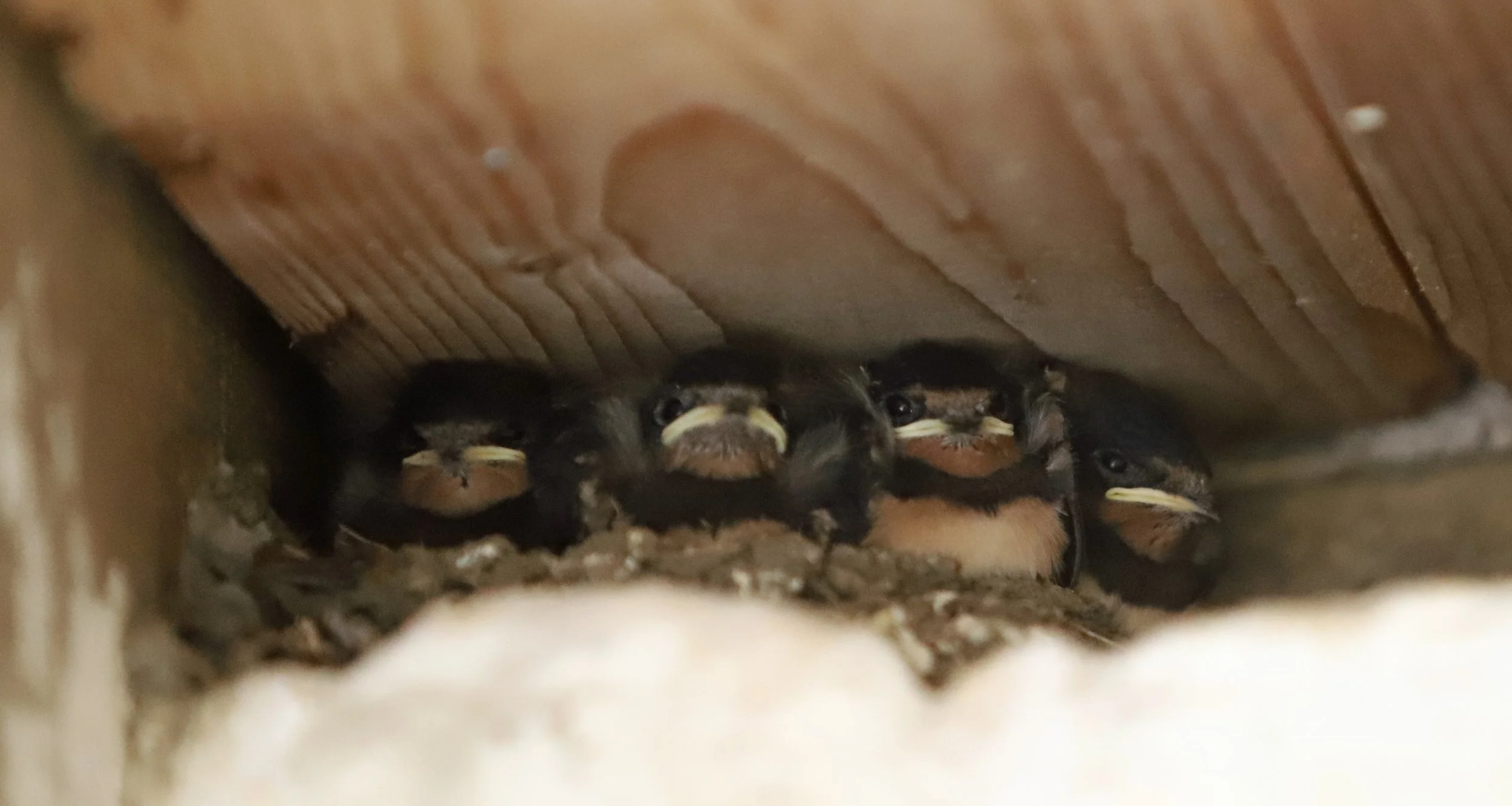
Swallows almost always build a mud and spit nest inside buildings
Pictures: author’s own
Swallows can often be communal, with several pairs nesting within the same building, but they are highly territorial with strong loyalties to a specific site. Parents and off-spring will return year after year to the same outbuilding and – if unexpectedly prevented from entering by conversion or repair – will spend pathetic hours searching for a way in.
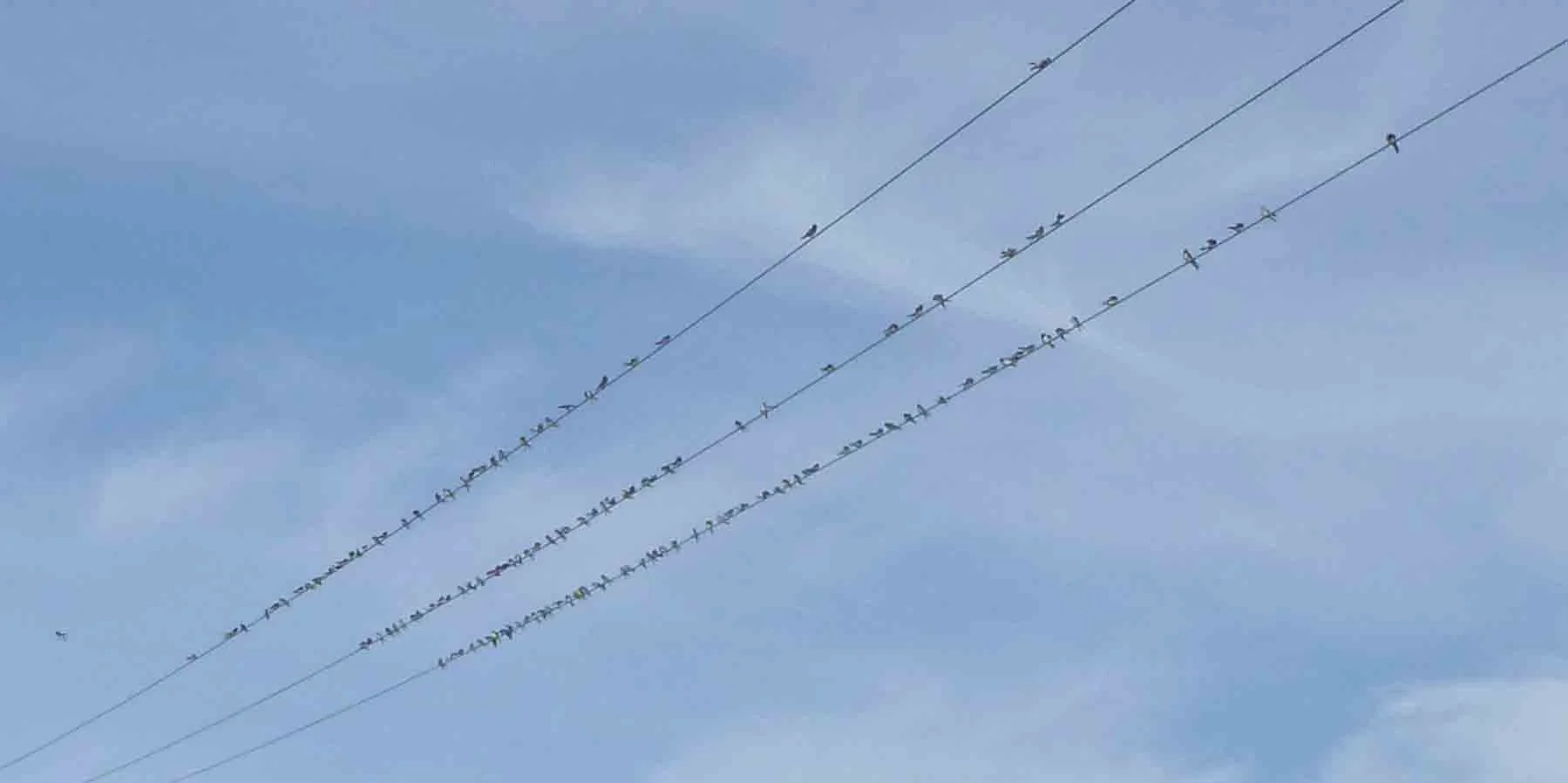
Late September sees scores of excited swallows gathering on phone wires as they prepare for the 6,000-mile journey south
Picture: author’s own
Once they have found a site and built a nest, the female lays a clutch of four to five eggs which, incredibly, hatches in just over two weeks, with the young fledging a little under three weeks later. Although the parents continue to feed the young for another fortnight, they soon begin another cycle and this rapid turnover means each pair can rear up to 15 young in a summer. To fuel this takes Herculean efforts as the parents return to the nest every few minutes with beaks bursting with insects. Small wonder that by late September they suddenly lose interest in reproduction and start to gather in excited twittering family groups on telephone wires as they summon the energy for their long journey to southern Africa.