By Daniel Butler: Author and forager
Although drying is one of the oldest ways to store food around the globe, it seems never to have caught on in Britain to the same degree as on the Continent.
This is surprising: drying is a very effective way to preserve meat, vegetables and especially mushrooms. Most food contains 70 – 95% water. This obviously makes it moist and easy to digest, but this also applies to millions of microbes. If you reduce the moisture to less than 20% (preferably lower), then even bugs find it impossible to consume.
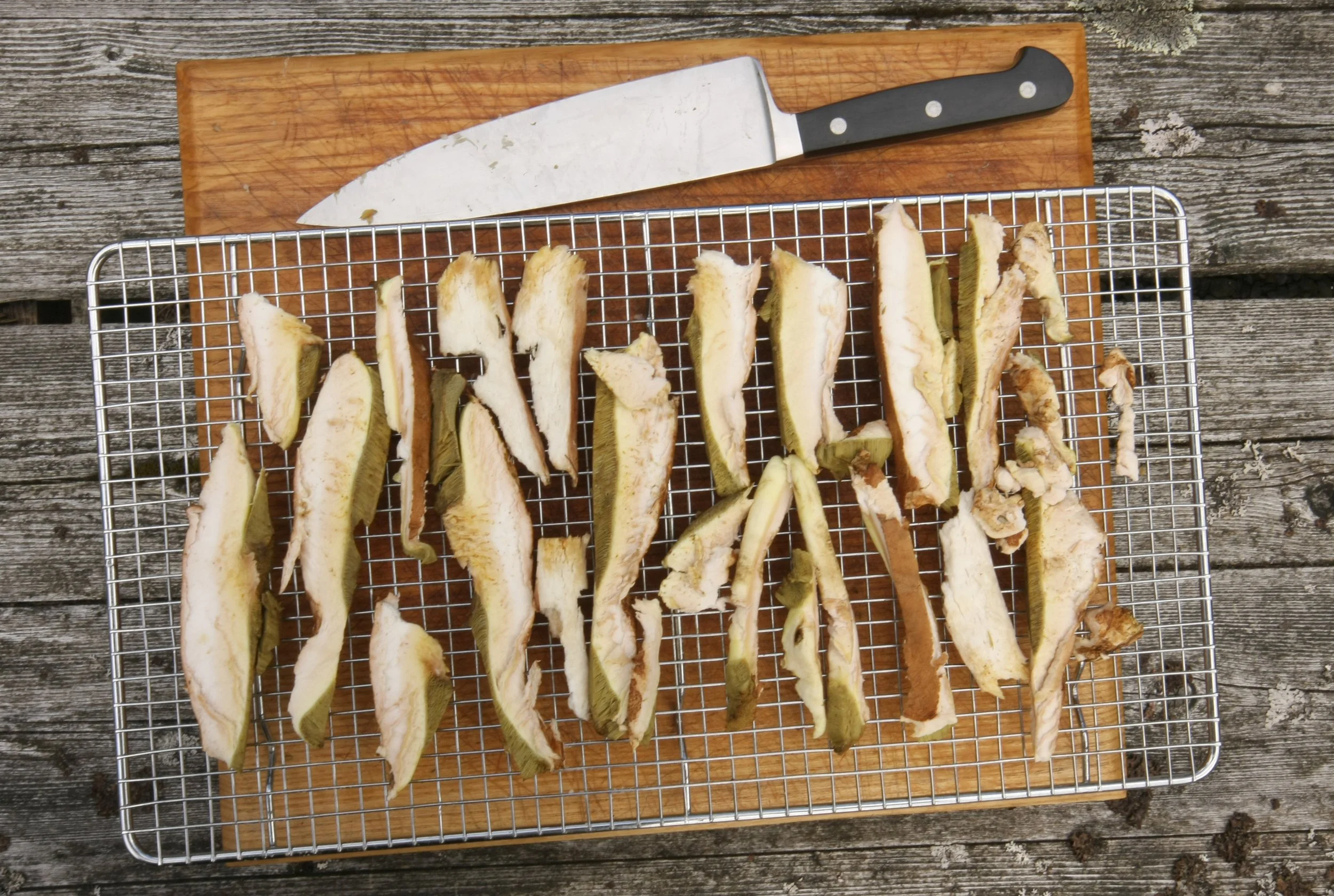
Mushrooms dry easily and well - indeed many are positively improved by the technique
(Picture: Author’s own)
Edible fungi dry particularly well – indeed it is by far the best way to preserve species such as porcini, morels and trompettes. The taste of the first is transformed and positively improved by the process, changing from a superior mushroom to something closer to a nut. Morels and trompettes, on the other hand, reconstitute to something close to fresh.
The main reason for the British reluctance to dry is probably because it can be mildly tricky in a damp, cool, climate. But, as the prevalence of back garden washing lines demonstrates, it is possible. The basic principles are very simple. Temperature is less important than airflow: so clothes dry quicker on a windy rather than a hot day.
It is important to maximise circulation. If mushroom slices are piled on top of each other in a warm environment, moulds soon start to develop between the touching surfaces. So clothes dry quickest when stretched taut on the line and farmers toss their hay several times before baling.
Keeping these principles in mind, drying mushrooms is easy. The biggest challenge is the race to beat the microbes and there are two broad methods: use the elements or employ artificial heat.
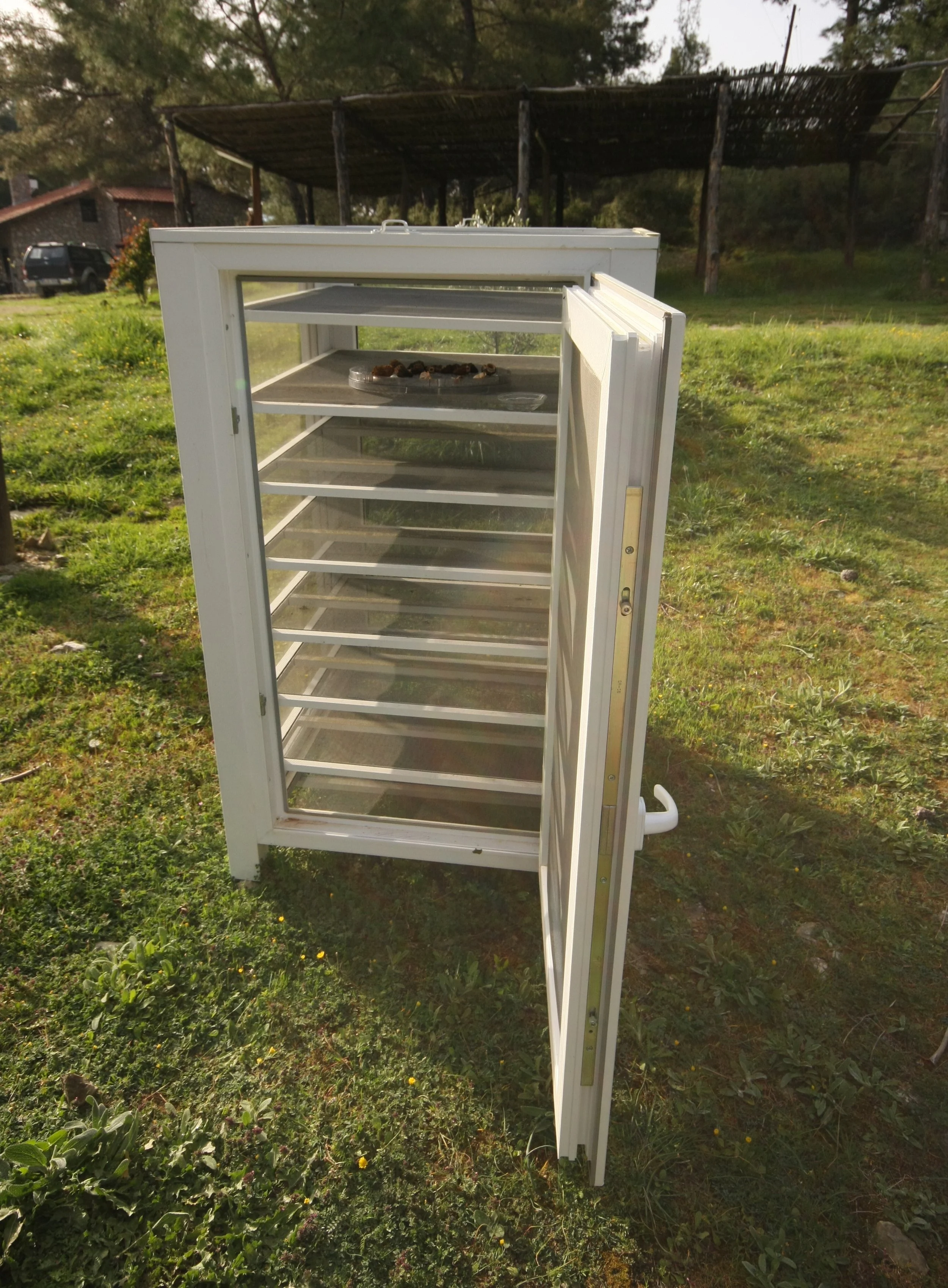
A drying chamber can be useful in hot climates - this one is in Southern Turkey
(Picture: Author’s own)
Most cultures which use drying on a big scale rely on wind and sun. This is obviously easiest in hot counties, but it is still possible here. If there is a clear hot spell at the end of summer, you can usually dry thinly-sliced fungi on wire racks or a sheet in the full glare of the sun. Alternatively, mushrooms can be threaded on cotton and hung (horizontally so they don’t touch) under cover in an airy outbuilding.
If you can’t rely on the elements, artificial heat could be the answer. The problem here is to avoid over-heating. Some people suggest drying mushrooms in a fan oven on the lowest possible setting with the door left slightly open. Actually, even this is usually too much for delicate fungi. Just as importantly it is also extremely expensive because if the door is ajar the thermostatic cut-off will never kick in.
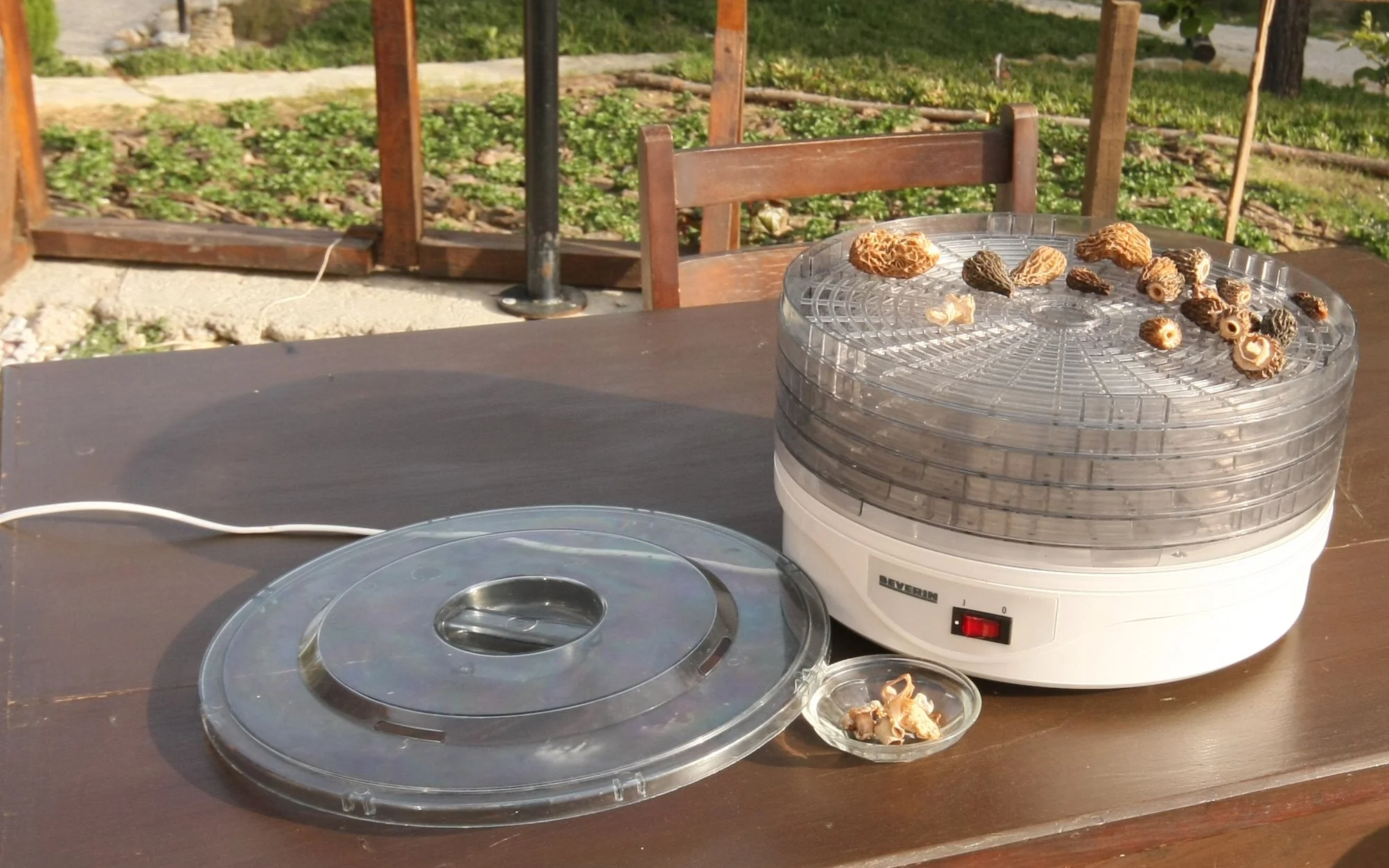
There are many cheap dessicators available on-line, but these tend to work at too high a heat
(Picture: Author’s own)
You can buy cheap desiccating machines online, but these are generally intended for meat and vegetables and tend to toast mushrooms. It is often easier to devise your own system. I use stackable cake racks placed on top of my wood burner. Underfloor heating provides the ideal warmth, but an airing cupboard or even over a very low-wattage incandescent lightbulb in a biscuit tin work well.
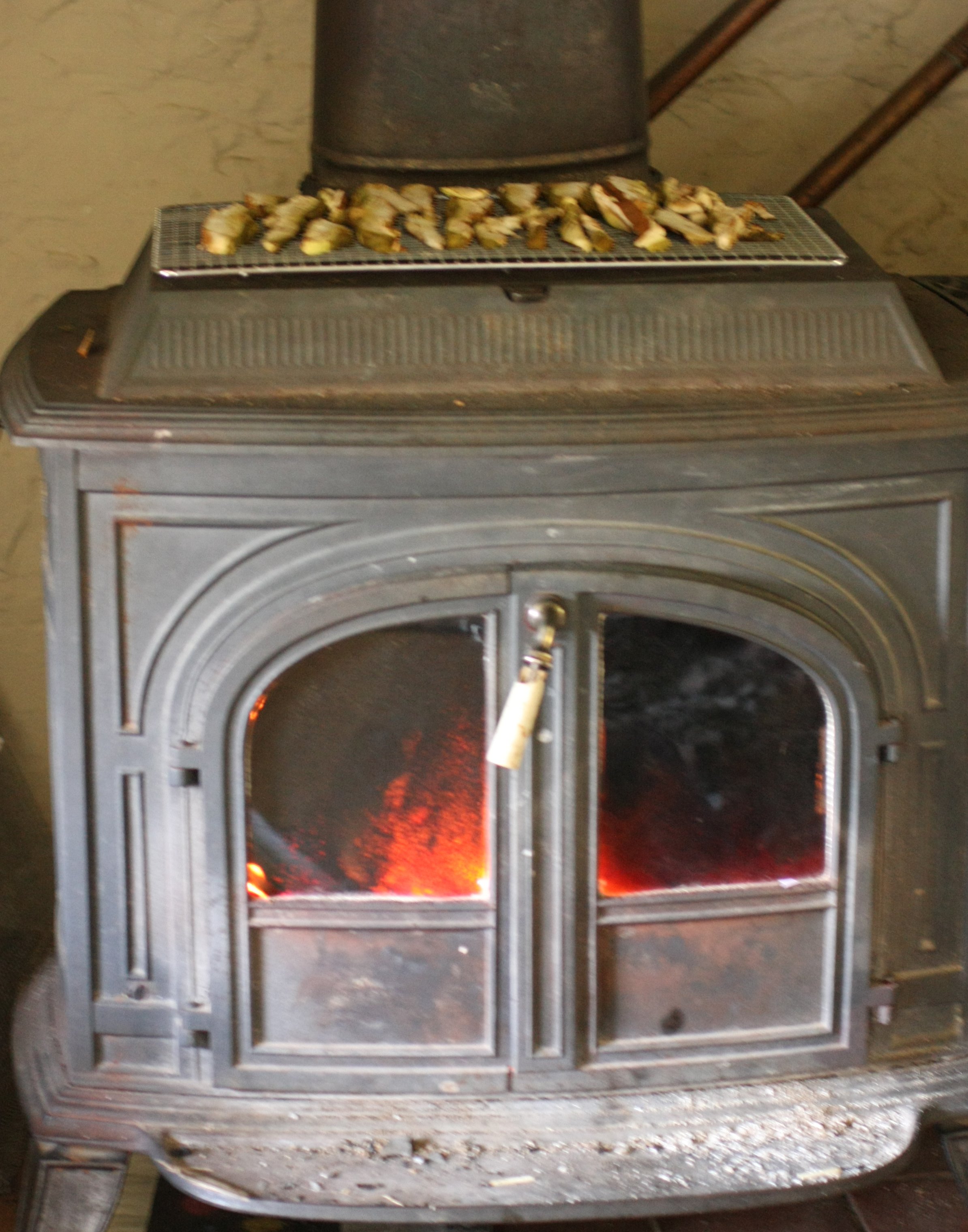
Drying on cake racks over a wood burning stove works extremely well
(Picture: Author’s own)
As your produce dries, keep a close eye on it, rotating it regularly to ensure it dries evenly. When conditions are right the process can be amazingly quick: only a few hours duration in some cases. Once dry, the results should keep indefinitely if stored in an air-tight container.