The real start to the season?
By Daniel Butler: author and forager
I have always had a great fondness for St George’s mushrooms (Calocybe gamboza). I rate its strong and distinctive flavour highly. In this I am not alone, for the Italians are particularly partial to using it in chicken and fish dishes. The real reason I am so fond of it, however, has to be that it marks the beginning of my personal mushroom year.
All right, I know there are edible mushrooms available every month of the year if one knows where to look and last month I heralded the start of the 2026 season by trumpeting the merits of morels. Unfortunately for me, these don’t grow in the acidic soils around my Welsh upland farm, but St George’s are less choosy, even though the books say they generally prefers chalky ground.
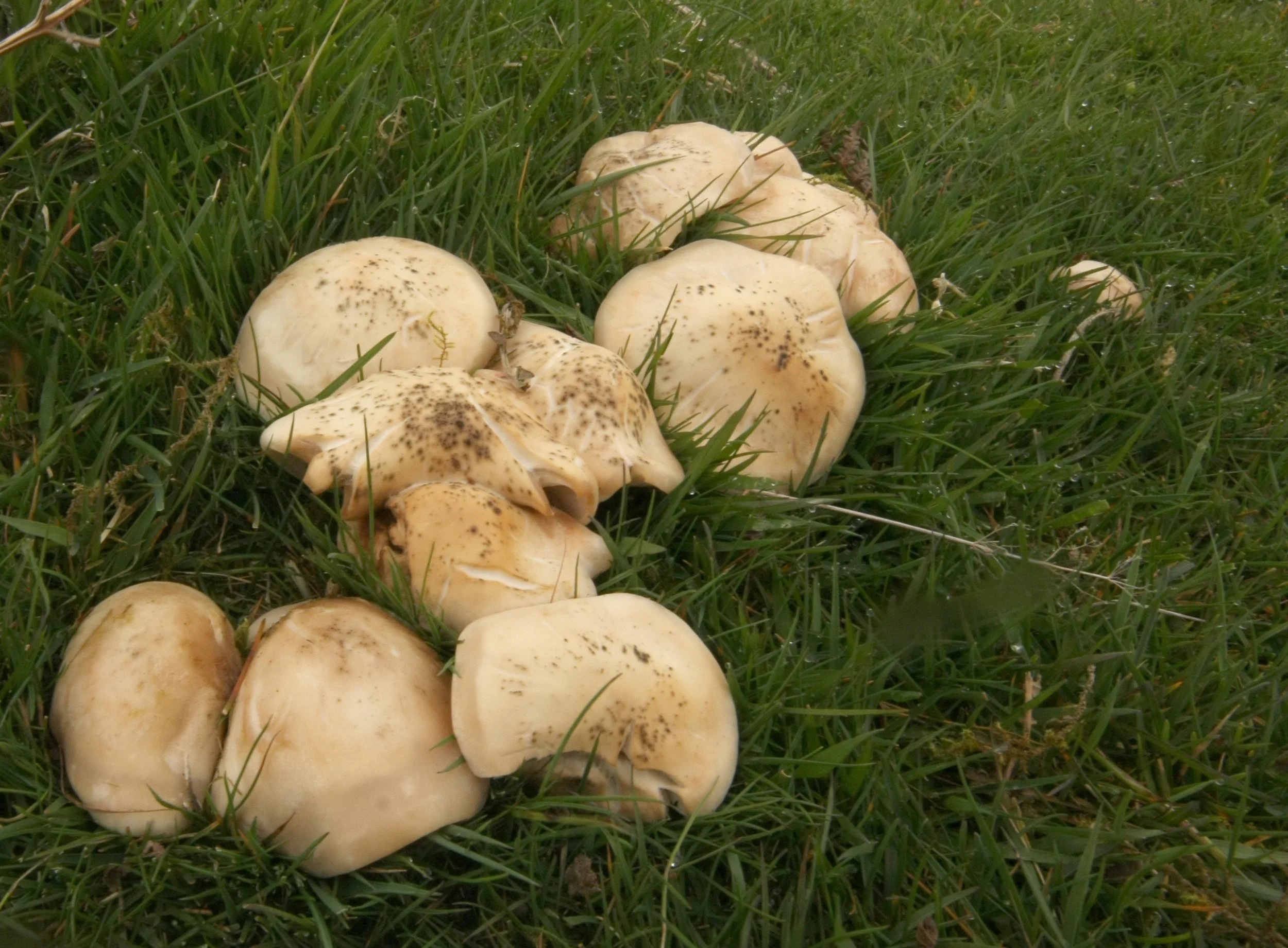
Clusters of St George’s mushrooms emerge in mid-spring in unimproved pasture
(Picture: Author’s own)
This delicious and locally-prolific mushroom is gets its common English name because it is supposed to emerge around St George’s Day (23 April). In fact it tends to come up a little later. This could be because its name probably dates back to the Middle Ages. We may think climate change is a modern phenomenon, but the climate then was a little milder than today (Southern England was then a wine producing region – a status which it lost for 400 years until the late 20th century).
On this historic note, it is a particularly long-lived mushroom - or at least its mycellia are. There are records of several rings in the East Midlands which predate the Black Death (1347 - 9). How do we know this? Well, like many mushrooms which grow in rings, it is possible to estimate the age of the fungus by measuring the diameter of the circle. What happens is that the mycellium starts when two spores land next to each other in exactly the right substrate. These start to send out hyphae (microscopic root-like structures). To produce a healthy mycellium capable of fruiting, the hyphae have to touch each other at exactly the right point of development. This is when genetic material is exchanged, allowing the fungus to proceed to the next stage. Over time the mycellium expands underground like a subterranean orb spider’s web, with the mushrooms fruiting around the outermost limits of the web. This grows by a matter of milimetres each year - so measuring the diameter gives a good idea of its age.
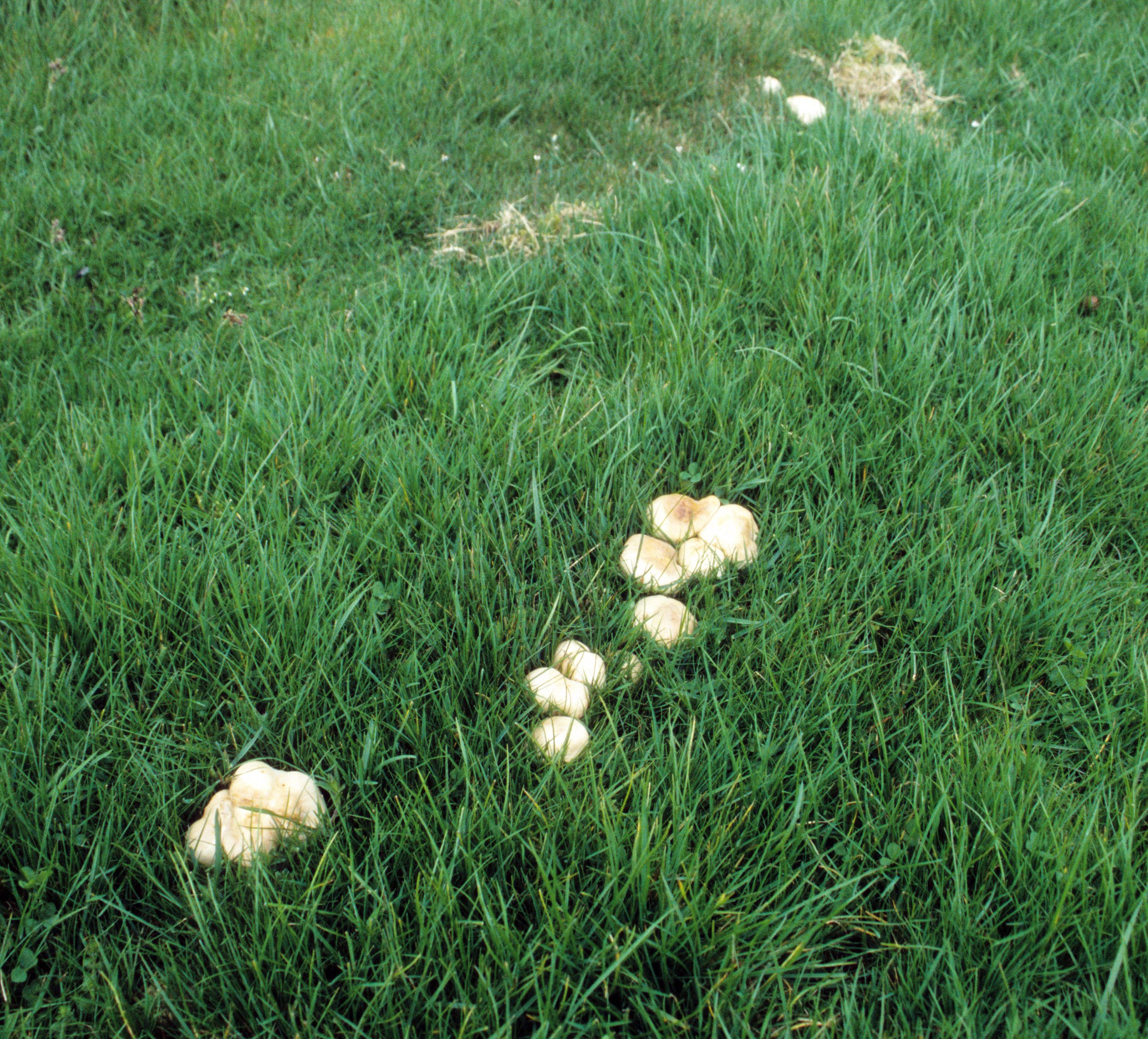
The ‘ring’ growth structure, which is just visible here, allows mycologists to age the mycellium
(Picture: Author’s own)
Anyway, I normally reckon to find my first in early May although over recent years I have found it at roughly the appointed time. Interestingly, its common Italian and German names reflect their emergence dates too. In Tuscany it is known as Marzolino (‘little March one’) while in the cooler north it is known as Maipilz (‘the May mushroom’).
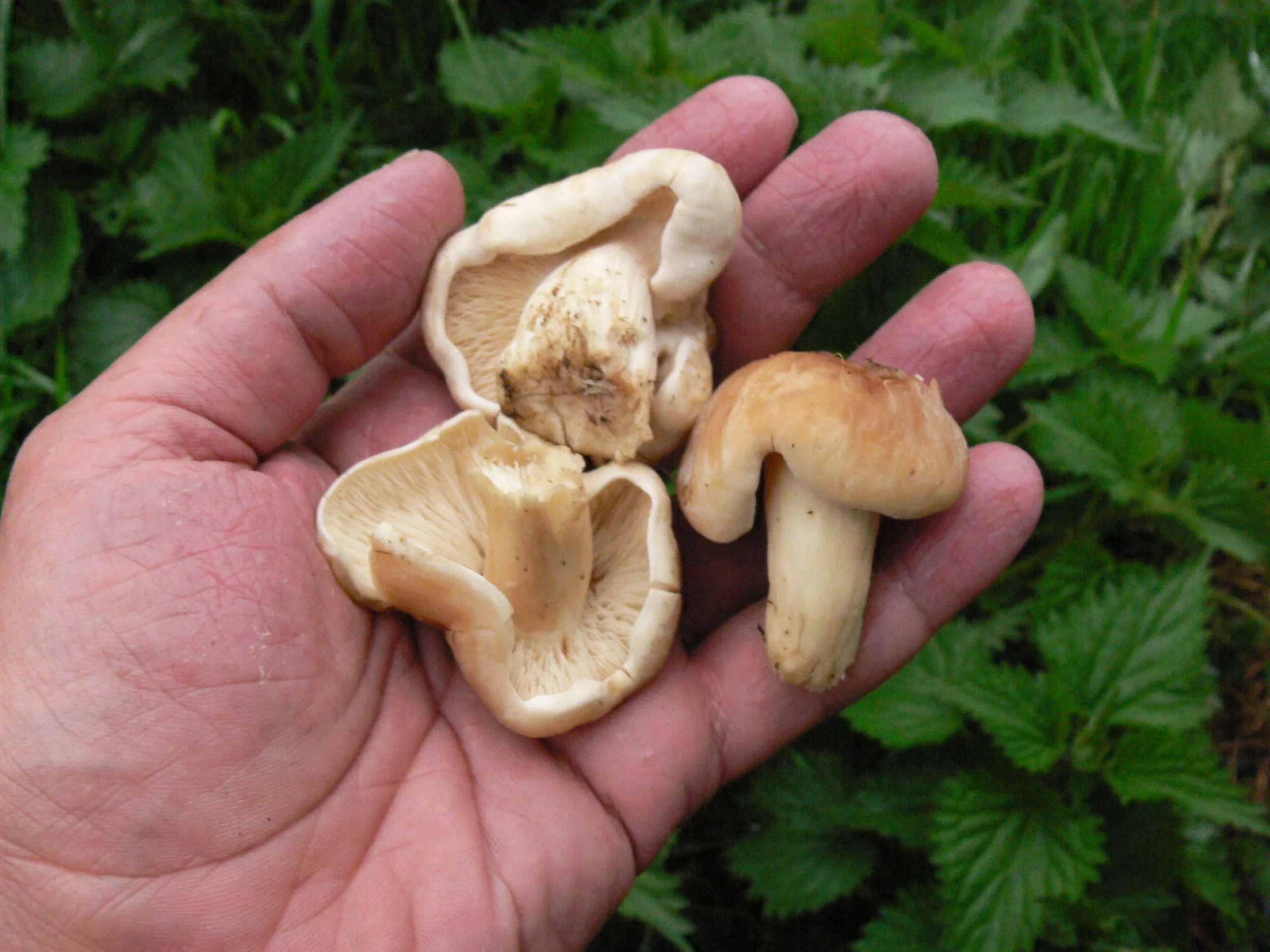
The cap ranges in colour from white to tan, while the gills are white and it smells mealy
(Picture: Author’s own)
This is shaped roughly like the cultivated mushrooms we buy in shops, but everything, including the gills are off-white. It is supposed to have a surface texture resembling kid glove leather and it has a distinct scent of oat meal. It grows in rough rings, often in association with nettles, and can come up in large quantities. In a good year it is easy to pick several kilos in as many minutes.
The lovely mealy flavour of St George’s mushrooms works particularly well with white meats, fish and cream.